Please ensure Javascript is enabled for purposes of website accessibility

Shirley Gibson tributes pair work accomplishments with her humanity

By Tim Clark

Shirley Gibson was many things—fierce advocate, patient teacher, brilliant attorney, mentor to many, stalwart colleague, and exposer of liars. But those who worked with her pair praise of her legal accomplishments with observations about her humanity: Hilarious, humble, deeply principled, empathetic, tactful, self-deprecating, outgoing, exceptionally compassionate, and a down-home Mississippi soul.

“Shirley blazed like the sun,” wrote tenant attorney Monique Doryland, as vividly as any of Shirley’s many colleagues and community partners who offered quotes for this article.

Her career was too brief, shortened by breast cancer that finally took her at age 49. Born in Mississippi and a graduate of Reed College, she studied law at the New College of California School of Public Interest Law in San Francisco. She began her career as a public interest attorney with the Eviction Defense Collaborative. In 2007, she joined the Legal Aid Society of San Mateo County to develop its housing program, rising to directing attorney in 2011.

Shirley was a community-minded collaborator, litigating housing justice cases with co-counsel across the state and working on projects with government agencies, social services organizations, and tenant advocates while building Legal Aid SMC’s eviction defense practice. Her teammates outside as well as inside Legal Aid SMC offered testimonials.

Tenants’ rights were at the core of Shirley’s legal practice, starting with her first public interest law job with Eviction Defense Collaborative.

“I knew her in the 90s at the Eviction Defense Collaborative, and then she jumped in to help on disaster issues as well. It seemed like she was everywhere. What I so appreciated about Shirley was how much she knew and did, and yet how self-deprecating she was. She managed to teach you things while somehow making you feel like you were still smart and knew things, and thus empowering you to actually become smart and know things.”—Tiela Chalmers, Alameda County Bar Association and Legal Access Alameda

“We had to work Christmas Eve one time, and I'll never forget how Shirley brought us all food and drink to show us her appreciation.”—Ryan D. Murphy, Eviction Defense Collaborative

When Shirley came to Legal Aid SMC in 2007, more than half of eviction cases filed by San Mateo County landlords were uncontested, meaning tenants received default judgments and were rapidly displaced. Within a few years, thanks to Shirley’s vision and hard work, the default rate in San Mateo County eviction cases had fallen to 35%.

“Shirley was an amazing, selfless advocate. She had such an enormous impact on the lives of tenants in San Mateo County, first by leading a team that significantly reduced the default rate in eviction cases and then by building on that work to help create a strong network of lawyers and organizers working together to fight displacement and homelessness in Silicon Valley. She was a mentor and ally for us as we built our own housing team and worked collaboratively with Shirley to defend tenants. Shirley had a wry sense of humor, an amazing memory for minute details about civil procedure and landlord-tenant law, and quick insight about how we can all do better for our clients. Her influence on a generation of tenants rights' advocates in the Bay Area -- and throughout California -- was real.”—Jason Tarricone, Community Legal Services in East Palo Alto

As Shirley was building her housing team at Legal Aid SMC in the late 2000s, the foreclosure crisis turned many former homeowners into tenants at risk of eviction by out-of-town banks.

“I first got to know Shirley during the foreclosure crisis when I was just starting out and we were all trying to defend against these big corporate monster banks. She would take everything to trial and prove the process servers were liars on the stand. We all knew they were lying but she was the one who held them accountable. She inspired me to fight harder and be more courageous in my advocacy. Shirley was so fierce, such a badass and such a warrior for our clients – and also an incredibly kind person and wonderful friend.”—Madeline Howard, Western Center on Law & Poverty

One of Shirley’s key legal battles was a class action lawsuit that protected more than 80 lowincome families living in a Redwood City mobile home park from illegal rent increases.

“I always felt incredibly honored to have worked closely with Shirley on a case fighting to protect mobile home residents from abusive, exploitative rent increases. Over five years of litigation, I had the privilege of witnessing Shirley’s smarts, incredible humor and wit, and ferocity on behalf of her clients. And of course, got an education in an array of Mississippi sayings. Her passing feels like a punch in the gut.”—Navneet Grewal, Disability Rights California

“All of us at Western Center considered ourselves fortunate to work with Shirley. She was smart, diligent and committed to doing what was best for her clients. But it is much more important to speak of Shirley, the person, rather than Shirley, the attorney. She was kind, deeply principled and funny at the same time. Who knew that Unitarians could be such good company. Shirley often spoke with such pride of her husband and her two children. We will miss her.”—Robert Newman, Western Center on Law & Poverty

Shirley led a challenge to the City of Pacifica’s 2019 ordinance barring oversized vehicles from parking on many streets. Concerned about the impact of the ban on vulnerable residents living in their recreational vehicles, Shirley invited civil rights advocates to join the fight.

“She told me, ‘I would hate to let this slide.’ She did not let it slide, and we had the privilege of litigating this case with her through its settlement and her passing. Shirley was a fierce and compassionate advocate for our clients and the houseless of San Mateo County. She was also an amazing colleague – smart and passionate, but also always witty and fun, and exceptionally humble despite her vast experience, knowledge, and history of cutting-edge advocacy. We have lost one of the greats in the legal profession, and we have lost a dear friend.”—Thomas Zito, Disability Rights Advocates

“From the very beginning, we knew we had the best advocate and leader imaginable in Shirley. She was passionate, committed, and determined. She cared deeply about the dignity of our clients, and her knowledge and insights made us a far better team. Although it’s clear now that she must have been very ill throughout our work, her energy never let up, and she maintained her high spirits, sharp wit, and wonderful sense of humor throughout. The legal profession has lost a superb practitioner, people in San Mateo County who are fighting for housing have lost a wonderful champion, and we have lost a dear friend. Rest in power, Shirley.”—William S. Freeman, ACLU Foundation of Northern California

Shirley collaborated with Redwood City officials and community members through the Partnership for the Bay’s Future, a regional effort to advance housing solutions.

“Shirley was integral to so many housing efforts in our community. She had a wonderful combination of knowledge, empathy and tact that invariably led to stuff getting done.”— Margaret Becker, Redwood City Housing and Human Concerns Committee

“Shirley never shied away from the difficult work of helping tenants and the unhoused, not only helping the tenants but also any advocate who needed it. She was an empathic and compassionate lawyer with a strong work ethic. This is a tremendous loss for all of us who knew her personally and for all the unhoused residents and tenants whose lives were made immeasurably better by the work that Shirley poured her heart and soul into. We'll honor her by continuing to advocate as fiercely as she did.”—One Redwood City

“I am very grateful to work with and learn from Shirley over the years. I admire how intelligent, collaborative, passionate and empathetic she was. She was a great community partner and a huge asset to the Redwood City community and broader San Mateo County.”—Alin Lancaster, City of Redwood City

“She embodied what it meant to be a champion for the underserved. I was always impressed by how skillfully she could take action on what needed to be done in the short term while never losing sight of the long-term arc of our housing work. Our whole team at the Partnership for the Bay's Future mourns Shirley's passing.”—Aysha Pamukcu, San Francisco Foundation

Shirley’s work in the community and the courtroom flowed beyond those she directly touched.

“Shirley will be remembered as a fearless advocate for our immigrant community, and by me for her tireless work for the residents of 855 Barron Avenue Mobile Home park. Shirley was an expert on the myriad and complex state laws regarding tenant protection, and she often shared very helpful thoughts/suggestions on what the County might do in this space, including in response to the COVID 19 public health emergency.”—Supervisor Warren Slocum, San Mateo County Board of Supervisors

“We can't underestimate Shirley's national reach either. An attorney from Legal Aid in west Texas convinced me to track down the paper copy of an abstract of judgment against her client who had relocated from California because she went to law school with Shirley, and ‘Shirley said you'd help.’"—Oliver Ehlinger, Legal Services of Northern California

Shirley’s singular presence left a mark on many others whose paths she crossed.

“Shirley Gibson is a giant. In the brief time I worked with her back when I was at the Stanford Community Law Clinic, she became one of my favorite people in the world – she knew everything, she was so generous with her time, and her laugh! It was infectious. No matter how bananas a case, she approached it with good humor, and made an enormous difference in countless lives - those of her clients and her colleagues. I wish I had told her what a difference she made in mine.”—Nisha Vyas, Western Center on Law & Poverty

“As an attorney and advocate, Shirley was brilliant, creative, and fearless. As a colleague and friend, she was all of those things but also kind, supportive, humble, and truly hilarious. I echo others' reflections that Shirley had an amazing way of making people feel valued and appreciated. She was one of my all-time heroes.”—Melissa A. Morris, The Public Interest Law Project

“I knew her for many years through Faith in Action and I am very sad that she is no longer with us. Shirley was a dedicated and talented attorney, but her true gift to the community was how she served the community - with her presence and understanding, her love for people and her dedication and passion for justice. May the goodness she put out into the world, ripple out to people and places we may never know.”—Ellen Hage

Among those she regularly collaborated with, Shirley built strong bonds.

“Shirley was such an amazing woman, fierce advocate, and all-around intelligent, gentle, caring human being. She continued to battle and advocate for our community to the very end, guiding us in how to best help our folks stay housed in spite of the pandemic. We will carry her spirit forward as we continue her legacy. She has certainly left her mark on me as an individual, our community center, our colleagues in the City and County, and on our community. We are all blessed for having known her.”—Teri Chin, Fair Oaks Community Center

“I will never forget working with Shirley on the creation of the Rural Justice Initiative to do housing pro bono clinics on the coast of San Mateo County. Her good humor, strategic thinking, brilliance, and commitment to clients and the work shone through every moment. In working out of mobile units jam-packed full of books and random supplies in the parking lot of a partner organization, she was unflappable and fully dedicated. The legal aid world is less vibrant without her and there is a huge gap that will not be filled.”—Julia R. Wilson, The John Paul Stevens Fellowship Foundation

“Shirley was a wonderful person and a determined advocate. Shirley was one of those people who, through sheer force of will, could make the impossible happen. She was an incredibly effective advocate for housing rights and social justice. We are so grateful for the time we spent together - learning from her, being inspired by her, and cheering her on as she made our world more just.”—Phil Hwang, OneJustice

“Shirley was an inspiration to me. She was a rare combination of conviction, exceptional ability, kindness, and grace. She helped so many people live with dignity. The people who worked with her adored her. She will be missed at Legal Aid.”—Janice Tam, Legal Aid SMC Board

Shirley’s clients were grateful to have her standing beside them as they fought for their homes.

“Thank you for donating to my go-fund-me account. I’m putting up prayers everyday for you to continue kicking landlord asses.”—card from client

“I’m so sorry to hear about Shirley’s passing. She was like the tall Viking warrior woman on Game of Thrones. We will miss her so very very much.”—voicemail from client

Shirley inspired a new generation of public interest attorneys.

“I am grateful that I was able to work under and learn from Shirley at Legal Aid during my first year as a lawyer. She approached her work as a tenants' rights advocate with incredible dedication, passion, and joy. I will keep my memories of her and the lessons that she taught me for the rest of my career. Thank you, Shirley.”—Ashley Luo, Legal Aid SMC Orrick Fellow 2021

“I learned so much from Shirley when I had the opportunity to work with her during my 1L summer. As the official “biggest pain in the ass in the entire state of California,” she was an inspiration to many young public interest lawyers who aspire to be zealous advocates for the underserved. I consider myself very lucky to have learned from her.”—Leah Kennedy, Legal Aid SMC Carl L. McConnell Summer Fellow 2020

“Shirley brought love, warmth, joy, and brilliance to everything she did. Her joyful attitude towards life and service was contagious and irresistible. When supervising, she fostered a supportive and growth-oriented culture among her team. At the weekly housing clinics, she set the tone for creating a welcoming and nurturing space for tenants seeking assistance, often in crisis. She modeled how to treat each client with humanity, empathy, and humility. When representing clients, she consistently demonstrated how to be a fierce advocate for those that needed it most. She inspired those around her to be better advocates and better humans. She embodied the meaning of service. She generously gave all she could as an attorney, colleague, mentor, and friend. She impacted and influenced so many around her in the best possible way.” —Lacei Amodei, Legal Aid SMC Project Coordinator 2016-2018, aspiring attorney

“Shirley was my supervisor when I was a Skadden Fellow a decade ago. She taught me so much about life and lawyering. In reflecting on her passing, I keep remembering a quote usually attributed to Fred Rogers: "Frankly, there isn't anyone you couldn't learn to love once you've heard their story." Shirley embodied that spirit. She loved all people, and she encountered each person she met with compassion, never judgment. In fact, the more broken, damaged, or downtrodden a client was, the more Shirley embraced them. But it wasn't some white lady savior thing. Rather, I think for Shirley it was a recognition that our imperfections, flaws, and failures make us human but do not detract from our value, beauty, or worthiness of love.”— Larisa Bowman, Legal Aid SMC Skadden Fellow 2011-2013

Those who had the privilege of working with Shirley every day admired and adored her.

“Shirley was the heart of Legal Aid's Housing Team for fourteen years, an outstanding advocate for vulnerable people at risk of losing their housing, and a passionate voice for stronger protections for tenants in San Mateo County and across the state. She was an amazing colleague and a strong supporter of her staff. Shirley will be sorely missed, taken way before her time when she still had so much to give; but we can all go forward carrying on the work for the cause that she lived for, in her honor, and using her energy and passion as our inspiration.”—David Carducci, Legal Aid SMC

“Shirley carried the torch for the next generation of change-makers who commit their whole selves to making their communities a better place. She inspired many with her courage, her intelligence, her wit, and her grace.”—Hope Nakamura, Legal Aid SMC

“From the moment I heard that Shirley Gibson had applied for a housing attorney position at the Legal Aid Society of San Mateo County, I was thrilled! I knew Shirley was a graduate of New College and a student of Ora Prochovnick who was one of her references. Stacey asked my opinion and I was a firm yes! I knew she would be the one to grow the housing program that our clients needed! And she did, of course with her steadiness, her willingness to mentor new attorneys and her fierce commitment to justice! Though she left us too soon she has left a legacy and a strong housing program that will continue on into the future. Thank you Shirley for being the amazing person you were and for sharing that with the rest of the world.” —Janet Seldon, Legal Aid SMC 2005-2020

“Everyone reading this knows that Shirley was an amazing lawyer, but she was an even better friend. We met at Legal Aid in 2007 and have been friends ever since. Shirley’s life provides a roadmap anyone would be lucky to follow: Surround yourself with people you love and who love you, use your talents to make the world a better place, never miss a chance to help someone in need, give generously, take risks, be humble, trust that tiaras go with everything, always have a good book at hand, and find the humor in everything.” —Amanda Barden, Legal Aid SMC 2007-2012

"I had the privilege of closely working with Shirley for over five years. From my very first day, I realized how much of an amazing woman she was – smart, strong, funny, gentle, and most of all, caring. She cared for everyone – family, friends, work colleagues and clients. What made Shirley truly special was that she made people feel cared for. I vividly remember the way she provided legal advice to our clients at our housing clinics and outreach events. She patiently responded to every question each client had, and clients felt heard, understood, and helped. She gave her all – her heart and her soul – to everything she did at the office, from planning someone's welcome party to arguing a summary judgment motion in Court for a class action lawsuit. The moment I heard that we had lost Shirley, I felt an emptiness and my heart broke. But I soon realized that her love, energy, enthusiasm, and passion will live with us and through us forever, and that we must continue fighting the good fight. Most of the things I know about housing eviction defense, I learned from Shirley. This is not an ending, but a beginning. Much love to you Shirley Elizabeth Gibson. We miss you dearly over here!" —Maria Chatterjee, Legal Aid SMC

“Shirley was a visionary, that rare person who both saw the big picture and could connect disparate pieces to make her vision a reality. She was the quintessential public interest attorney, equally at home arguing arcane details of mobile home law and explaining to a group of clergy why rental assistance for landlords was good for their congregants. She was a dedicated partner, working with other housing advocates to ensure sure scarce legal resources were focused on low-income tenants who couldn’t afford to lose their homes. I was privileged to work alongside Shirley for fourteen years. She was a brilliant and inspiring leader who taught me so much about building and nurturing a team. I will miss her vision, her wisdom, her fire, her kindness, and her humor.”—Stacey Hawver, Legal Aid SMC

“All of us who knew Shirley knew her to be the fiercest, funniest, and most generous colleague and friend we could ever have dreamed of. I personally learned everything I know from her, and I know I'm not alone. Carrying on without her is vaguely unimaginable, and yet I know we must and that she'd want nothing else. May her memory be a blessing. Onward.”—Juliet M. Brodie, Stanford Law School
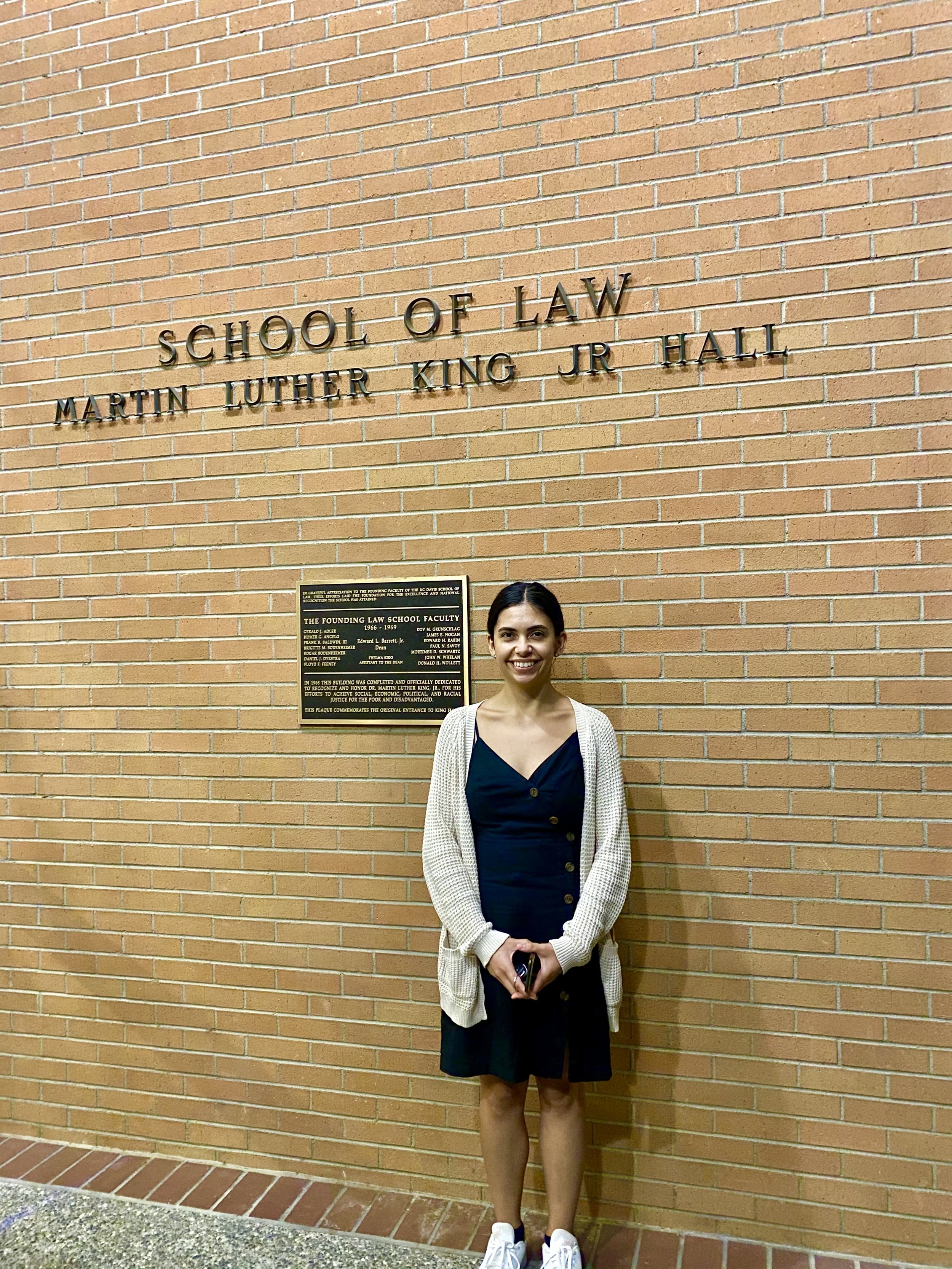
A Summer with Legal Aid: Carl L. McConnell Fellowship

My name is Cinthia Padilla Martin, and I am a law student at the UC Davis School of Law. I spent this summer working as the Carl L. McConell Fellow for LIBRE at the Legal Aid Society of San Mateo County. As my time here ends and I get ready for my second year in school, I am looking back on this summer experience and what brought me here.

Like many of the families served by LIBRE, my parents migrated to the US hoping for a better life. Their sacrifices and hard work inspired me to pursue a career that would enable me to help families such as my own. A career in law was a natural choice, as migrant and low-income communities have a need for free or low-cost legal assistance. I enrolled in law school with a predilection for work in public interest law. Fortunately, LIBRE’s mission and core values aligned perfectly with my legal aspirations, and they decided to take me on as a summer fellow.

Ten weeks ago, I was anxious about starting my fellowship with LIBRE. I had previously worked in the legal sector, but this would be my first job as a law student. Through my prior job as a legal assistant, I experienced the clerical aspect of legal services. However, I was desirous of the legal work of an attorney. To my delight, the LIBRE team was receptive to my aspirations and gave me meaningful legal work.

Over the past ten weeks, I have been exposed to the ever-changing world of immigration law. I have been able to shadow court hearings, legal consultations, and client meetings. Moreover, I have worked on DACA, U-Visa, and SIJS forms for clients seeking immigration relief. I have also gotten a glimpse of the more mundane activities of being an attorney, such as attending webinars and meetings, and staying current on the latest immigration updates. But perhaps most importantly, I have learned a great deal about the human aspects of an attorney’s work.

Working at a non-profit organization that serves low-income communities requires wearing many hats. I have witnessed LIBRE attorneys listening to and consoling clients who have survived traumatic experiences. The attorneys’ compassion doesn’t go unnoticed; clients express gratitude for the validation and help that they receive. These interactions have convinced me that beyond good legal work, a good attorney must also demonstrate sympathy toward clients. This is the kind of attorney I strive to be some day.

My time with LIBRE and the Legal Aid Society of San Mateo County has come to an end, but I will always be grateful for the experience and the people with whom I worked. It has been a true pleasure to work alongside people with bright minds and a passion for helping low-income communities.

As a closing note, I would like to say thank you to the funders of the Carl L. McConnell Fellowship. I come from a working-class background, so your funding has made it possible for me to take a public interest job. My summer earnings will go toward covering next school year’s expenses, such as books and rent. My deepest gratitude goes to you.

Housing costs squeeze nonprofits

Tim Clark

Tim Clark

In 2017 and 2018, the Legal Aid Society of San Mateo County lost three attorneys to Sacramento. Better jobs? Higher pay? More fulfilling work?

None of those. Each of the three cited Bay Area housing costs as a reason for leaving. Another left because the daily commute from less pricey Pittsburg (in East Contra Costa County) to Redwood City was unsustainable.

“For our younger attorneys, the cost of housing in this region makes it tougher for them to stick with us even though we’ve raised salaries. Recruitment has been tougher too,” says M. Stacey Hawver, executive director of Legal Aid Society of San Mateo County. After a rash of departures in fall 2018, LASSMC raised the starting salary for attorneys 11.3% and the starting salary for entry-level employees 16.5%.

“To absorb that increase into our budget, we collapsed two attorney positions into one,” says Hawver, who hopes to raise additional funds to restore the lost attorney position. She also expects to raise salaries again in January to keep pace with other nonprofit law firms. Since 2016, LASSMC has increased the starting attorney salary by 21% and the entry-level non-attorney salary by 37%.

It’s a similar story at many other nonprofits in San Mateo County being squeezed by the Bay Area’s escalating housing costs. Rents or house payments are reinforced by the associated traffic that engulfs people who move to the outskirts of the Bay Area in search of cheaper homes, only to discover that many others pursued the same dream and are clogging roadways.

“The very people working with low-income residents to keep them in housing are themselves at risk of losing their own housing,” says Bart Charlow, CEO of Samaritan House in San Mateo, a nonprofit that addresses food, housing and financial empowerment for low-income clients. “Nonprofits are not able to pay well, and our staff can’t pay for their housing in goodwill.”

Instead, they pay in time spent in a vehicle. “We find that among nonprofits more and more workers are living in southern Santa Clara County, Alameda County, Contra Costa and even Vallejo,” Charlow says. To serve 14,000 clients, Samaritan House’s financial constraints mean that in addition to its 83 paid employees, it needs 3,300 unpaid volunteers to address its mission.

Nonprofit salaries are part of the problem. In the latest U.S. government statistics, San Mateo County’s cost of living puts a single person with an income of up to $56,420 as “very low income”; for a family of four, the very low income figure is $80,600. The median income for a family of four is $136,800, a figure higher than some nonprofit executives make. Many nonprofit workers fall below the very low income benchmark.

At Peninsula Family Services in San Mateo, housing issues are especially acute for its 80 teachers in its child development centers. The agency’s early childhood educators, who teach children ages 0-5 years, are generally at the low end of occupational pay scales. “It’s a low-wage field and it’s expensive to live here,” said Heather Cleary, CEO of PFS.

“We have temporarily shut down classes a few times for staffing reasons,” Cleary said, shifting students and teachers around to meet required staffing ratios. At the same time, PFS did not enroll new children from its lengthy wait list.

“It’s a huge challenge,” said Cleary of the housing crisis’ impact on her agency. “We’ve had a hard time recruiting for all positions,” adding that since she started at the agency in 2010, it has never had a full complement of teachers. She mentioned a currently unhoused teacher with a disabled child who are temporarily living in a Holiday Inn while seeking housing that is both affordable and offers wheelchair access—a difficult combination.

Part of PFS’ problem is that teacher wages are tied to the state government’s reimbursement rates for early childhood education, so Cleary spends time in Sacramento lobbying for higher rates that can translate into higher teacher salaries.

If the housing problem seems clear, the solutions are complex and controversial, which may explain why San Mateo County nonprofits have been reticent to speak out for affordable housing. “Housing is tricky,” says one nonprofit executive. “I have donors on all sides of that debate.”

Other agencies may fear they will look bad if they talk about staff turnover, fearing that would-be job candidates might spurn them. Or that the topic will come across as too negative or reflect badly on the organization. Or that, like Cleary, they would rather focus on agency revenue than wade into the sometimes-fraught politics of housing.

Nonprofit leaders are clearly hoping someone else raises their concerns, both to amplify individual agency voices and to insulate agencies from political fallout. In June, state Sen. Scott Wiener, an outspoken housing advocate whose district includes parts of north San Mateo County, spoke at a forum on “Housing the Nonprofit Workforce and Clients - Opportunities and Challenges.”

“In the Legislature, we often hear from housing developers and housing advocates about the need for more housing at all income levels. But we know that California’s severe housing crisis also impacts our nonprofits and their staff,” said Wiener after the forum. “When workers cannot afford to live in their communities, it makes it harder for nonprofits to provide much-needed services.”

The Wiener forum was organized by Thrive, The Alliance of Nonprofits for San Mateo County, a sort of chamber of commerce for nonprofits that boasts more than 200 members. Thrive will be presenting its own housing policy statement that reflects how the housing crisis is affecting nonprofit workers, a step that both Cleary and Charlow would welcome.

The housing crisis “affects the nonprofit workforce and therefore our ability to serve,” Thrive’s document states. “Nonprofit staff provide most of the services for these [low-income] populations, yet increasingly they cannot afford to live here themselves. Recruitment and retention have become a serious challenge for our sector.”

The document recommends multiple specific policies and reminds lawmakers that many nonprofit workers make significantly less than public sector workers such as teachers and firefighters. They serve the most vulnerable in our communities, but their own needs are not being addressed.


Tim Clark is a partner at The FactPoint Group a Silicon Valley-based research, and consulting firm that is dedicated to the business improvement of its clients. Tim has been vice president at Net Market Makers, a Berkeley-based firm that did pioneering B2B research and market development. Prior to that, Tim was a reporter and editor for 24 years, working as senior editor and e-commerce columnist for CNET's News.com, Interactive Week and Advertising Age. He also has been an editor at San Jose Mercury News, San Francisco Business Times, and Palo Alto Weekly. In addition to his role as a FactPoint partner, he is the author of B2Bwatch, FactPoint's electronic newsletter of news and analysis of Internet commerce. Tim’s background as a journalist and B2B commerce analyst has earned him a respected byline in the industry. He holds a AB (with honors) in history from Stanford University. A concerned citizen who wanted to learn more about the issues facing low-income persons in our community, Tim got in touch with the Legal Aid Society of San Mateo County shortly after the 2016 election and has remained a dedicated volunteer ever since.

Legal Aid Leads Deportation Defense Campaign

Tim Clark

Tim Clark

When San Mateo County decided, under pressure from community advocates, to earmark $764,000 to defend low income San Mateo County residents threatened with deportation, the Legal Aid Society of San Mateo County found itself in the middle of the negotiations. Legal Aid had earned that position.

After faith-based activists at Faith in Action and its community allies—San Mateo County clergy, congregations and communities—brought the energy, the County Board of Supervisors came up with the cash while M. Stacey Hawver, executive director of Legal Aid Society of San Mateo County, rounded up the legal talent.

Together they mustered the resources that will, by September 2019, provide deportation defense services (“removal defense” in legal lingo) to 150 San Mateo County residents. That’s about $5,000 per case, a relative bargain for removal defense work. All in all, four FTE attorneys will handle 150 cases, an average caseload of 35-40 cases, a significant expansion of indigent immigration services.

“These cases won’t end in a year,” says Hawver. “We told the county that we would come back for more money this year because many or most of the cases will continue.”

The goal of 150 cases by September appears within reach--through five months ending January 2019, 50 cases had been opened, but the program had to ramp up to hire and then train attorneys for the work. And demand outstrips even the increased supply - an estimated 1,400 county residents currently face deportation proceedings without legal representation.

But this immigration law story really began back in 2017, recounts Lorena Melgarejo, executive director of Faith in Action, which she describes as “building leadership in everyday people, mostly through churches and schools.” Immigrant communities in San Mateo County, like those across the nation, were terrified after the 2016 election of President Donald Trump.

Faith in Action’s 2017 San Mateo County immigration push resulted in $276,000 in county funds for immigration workshops, brief legal consultations, and “affirmative immigration cases”— new legal help for county residents who wanted to apply for citizenship, DACA (Deferred Action for Childhood Arrivals), U Visas for victims of crime, Violence Against Women Act (VAWA), Special Immigrants Juvenile Status for child victims of parental abuse, neglect, or abandonment, or other forms of immigration relief. The county then declined to fund deportation defense.

“That was a good win in 2017, and Legal Aid managed the funds and built a network of attorneys to do the work,” says Melgarejo. “Working with Stacey has been great.”

So when Faith in Action and clergy in the Peninsula Solidarity Network and hundreds of advocates asked San Mateo County for $764,000 to defend immigrants in deportation proceedings—not just “affirmative cases”— both the county and advocates naturally turned again to Legal Aid as a procurer of legal talent. Spread out to match lawyer language abilities to clients and ensure access in all regions of the county, seven agencies share revenue in the current contract:

  • International Institute of the Bay Area added one full-time attorney.

  • Asian Pacific Islander Legal Outreach added one full-time attorney to serve North San Mateo County, particularly the Filipino community and speakers of Asian languages.

  • Catholic Charities hired two half-time immigration attorneys.

  • University of San Francisco Immigration & Deportation Defense Clinic added a half-time attorney to spend at least two days per week in Pescadero and Half Moon Bay because the Coastside area was recognized as underserved with immigration legal resources.

  • Legal Aid of San Mateo County hired a half-time attorney, who splits time with its LIBRE program for immigrants.

“It was important that county government put in money to say to immigrants ‘You belong here,’” Hawver says. “We want them to feel secure in raising their children and in going to their jobs, to reduce fears that at any moment someone could be snatched and disappear with no recourse, with no one to help.”

The contract also includes funding for the Immigrant Legal Resource Center, which helps train lawyers, and Faith in Action’s Rapid Response Hotline for verification of ICE enforcement activity, attorney activation, information and referrals, and accompaniment services to support immigrants attending immigration court hearings. In addition, other legal agencies that did not participate in the contract also provide immigration legal services in the county: Community Legal Services of East Palo Alto (CLSEPA), Pangea Legal Services and Tahirih Justice Center.

Of the program’s first 50 clients through January 2019, 29 were younger than 18 years, with 20% under age 6. The preponderance of young undocumented immigrants surprised County Supervisor David Pine; it in part reflects Legal Aid’s active practice with special immigrant juvenile status cases.

The largest number of cases were from Guatemala and El Salvador, followed by Honduras and Mexico. Initial clients live in Daly City, East Palo Alto, Half Moon Bay, Pescadero, Redwood City, San Bruno, San Mateo and elsewhere in the county.

The San Mateo County contract serves low-income county residents in deportation proceedings and prioritizes:

  • Residents at imminent risk of removal

  • Unaccompanied minors

  • Elderly immigrants and those with special needs

  • Immigrants with strong claims for relief from removal

  • Immigrants with longstanding ties to San Mateo County

  • Immigrants who do not have serious criminal records.

The issue of immigrants with criminal records almost derailed negotiations last summer and ultimately delayed the contract by a month. Immigrant advocates sought to avoid an absolute bar on representing clients with criminal records. In the end, the contract requires legal services agencies to screen applicants for criminal convictions and get the County Manager’s approval to represent a client who has committed a serious or violent felony in the last decade. The issue hasn’t arisen so far under the contract.

When the first contract ends in September, Hawver says it will have produced “a well-trained cadre of removal defense attorneys” hired and trained under the contract. The community, she hopes, will have “a sense that there’s a bigger safety net for deportation proceedings.” As for the County, “We will meet our goals and have good stories--but they’ll still wish we could take 150 new cases in a second year. Which we can’t.”

Melgarejo effuses more. “We don’t celebrate our victories enough. Rejoice a little bit. Sometimes we can win. It’s not going to be perfect, but it’s 100% better than it was last year.”

Administration stirs fear, stress, resilience on immigration front

Tim Clark

Tim Clark

Anxiety stress and resilience seep across desks at the Legal Aid Society of San Mateo County, troubling immigration attorneys and their clients alike. But at the same time, the strength of their clients’ human spirits inspires the attorneys to continue.

For an undocumented immigrant, the fear can start by just asking for help, but for some the fear stems more immediately from the Trump Administration’s recently proposed changes to the “public charge” rule. A “public charge” is an individual who is deemed likely to become primarily dependent on the government for subsistence.

The proposed changes could deny a visa or green card to immigrants, if they utilize certain—but not all—federally funded healthcare, nutrition, and other basic needs programs. The confusion arises over which benefits are affected—and whether an immigrant family should accept those benefits.

“The actual impact is narrow, but the chilling effect is broad,” says Hope Nakamura, a Legal Aid attorney specializing in government benefits. “It only affects the individual immigrant’s use of benefits, not a family member’s.”

Jonathan Garcia, an immigration attorney at Legal Aid, says the proposed changes have already confused clients. “Usually on benefits, the question is ‘Should my kids get off benefits?’ even though they are U.S. citizens and entitled to them.”

San Mateo County social service agencies report immigrant families dropping off free school lunch programs or CalFresh (food stamps) out of the unwarranted fear that even a citizen child’s use of a public benefit could jeopardize the immigration status of a non-citizen parent. So, the chilling effect spreads broadly, even among those not technically affected by the proposed changes, which won’t take effect until at least February 2019 and might not become effective at all if the Trump Administration is persuaded to abandon efforts to change the rule.

“Public charge has always been convoluted,” says Dana R. Peters, a Legal Aid immigration attorney who was a social worker for 15 years before her legal career. “Now the Administration is trying to make it harder for people.”

Garcia adds: “With the current Administration’s added pressure, people want a simple yes/no answer.” That puts more pressure on immigration attorneys because the changing rules require more legal analysis of uncertain and potentially shifting circumstances.

How do lawyers advise immigrant clients who are using soon-to-be-targeted benefits? A safe answer would be simply to avoid all government benefits, but for an impoverished family—Legal Aid clients’ median income is $20,220—giving up benefits can significantly dent their ability to cover basic living expenses.

The crossover between immigration law and public benefits requires immigration attorneys to learn a considerable amount about government benefits, which otherwise might be an only distantly related field.

The focus turns back on attorneys in other ways. Recently, Peters says, more clients ask their attorneys who they voted for. She considers it a proxy question for, “Do you trust this Administration on a personal level?”

The spreading fear in immigrant communities affects immigration cases in other ways. Applicants for U visas (for crime victims) are asked to get personal support letters from witnesses or friends to testify to their good character. But if their friends are undocumented immigrants themselves, they may be too scared to write a letter.

The stakes are high for clients and attorneys alike. “If you lose the legal case, the client may go into deportation,” Garcia says. The new uncertainty around public benefits creates greater risk. “Before, if you were denied an immigration benefit, you were not put in an active deportation case. Today, you get a notice to appear [at Immigration] and you must fight your case or get deported.”

Working constantly with clients prone to deportation weighs on Peters and Garcia, but they practice self-care. For Garcia, that may mean skipping the TV news when he goes home. Instead he unwinds in the great outdoors, in the gym working out, or escaping through a movie. “I like to visit my family in Southern California,” he adds. “With them, I’m just me, not the attorney with all the answers.”

Peters makes Sundays her no-car days “to take a break from the rat race.” Ask her what work she does for a living and she’ll answer, “I don’t work for a living; I live for a living.”

For Peters, a jujitsu practitioner of 3.5 years, the sport serves as another escape. “That’s the one place I can’t think about anything but what I do in the moment,” because immigration or clients or the office distract her from the opponent.

“Besides, if you choke someone out, that feels really good,” she says, referring to the act of a jujitsu opponent capitulating.

Despite the stress and fear, the attorneys find inspiration from their clients.

“The clients are very resilient,” says Garcia. “They’ve been here for 20, 30 years and they’re glad you’ve answered their questions. They’re going to find a way to stay here.” He described an undocumented client who goes to work daily under a cloud of expulsion. “I told her, ‘You are brave and strong, to go and live your life under the constant threat of deportation.’ She teared up and said thank you.”

“I’m in awe of our clients,” adds Peters. “They are much more resilient than the rest of us.” She mentions the emotional episode of taking a declaration, which involves the client telling the full story, often tearfully, of why he or she is applying for legal relief. Interviews generally end with gratitude and thank-yous.

“It recharges you because it seems like you make a difference,” Peters says.

Summer with Legal Aid: Carl L McConnell Fellowship

At the beginning of the summer, after completing my first year of law school I was eager and excited to join the team of lawyers and staff at the Legal Aid Society of San Mateo County.  The friendly faces I met assured me of the positive work environment and comradery in the office.  My first week, I observed many different client intakes with the immigration and family advocacy legal teams.  By Friday, I was attending the Tenants’ Clinic at Fair Oaks Community Center to work with the Housing team to help defend tenants in fear of eviction.  That initial week immediately opened my eyes to the daily work of lawyers at Legal Aid: community service.  I noticed all the lawyers were asked a lot of questions and were really listening to their clients to better understand how to help them.   

Soon after, I followed Jenny and Dana to probate court where Jenny represented a young boy from El Salvador at a guardianship hearing and was granted a continuance for Special Immigrant Juvenile Status.  Dana showed me around the courthouse as she filed guardianship paperwork for a young boy who left Guatemala for a better life here in the States.  Over the next couple of weeks, I worked closely with real people dealing with real problems in their legal status, housing situation, healthcare resources, and everyday lives.  The Legal Aid Society of San Mateo County finds a voice for these underserved members of community by helping connect clients to resources and finding legal solutions to improve their quality of life.

With families being torn apart at the border, frequent ICE raids across the country, and changes in legal relief, it was exciting and motivational for me to work on the ground with the immigrant community here in San Mateo County amidst the current administration’s anti-immigrant culture.  I have enjoyed working to better the lives of these people who are victimized because not only are they underrepresented, but I believe they deserve the same basic opportunities and access to resources as others.  Many of the people who come through our doors are hard-working mothers and fathers trying to raise a family here in hopes of a better future for their children.  Sometimes they are young educated adults like me, but who happened to be born in a foreign country despite having only known America as home.

The Legal Aid Society not only works to solve legal issues for immigrants and mixed families that come into our office, but also participates in events around the community to raise awareness and spread accurate information to empower the community.   It was this type of work that kept me eager and excited to come into work every day at the Legal Aid Society of San Mateo County and an invaluable experience that has helped shape me as a future lawyer.

Summer Internship: Elizabeth's experience at Legal Aid

We are grateful to our summer interns for sharing their passion for justice. Read Elizabeth’s blog about her experience at Legal Aid.


Elizabeth Staton

Elizabeth Staton

My name is Elizabeth and I am the Health Consumer Center’s Summer Intern. I am entering the last year of my undergraduate education at Swarthmore College. My role at Legal Aid involves helping people to secure affordable healthcare coverage and maximize their Medi-Cal and Medicare benefits. Additionally, I join the housing team on Fridays at their clinic in Redwood City to help individuals know their rights as tenants and navigate the legal process surrounding unlawful detainers and eviction. This internship is a great way for me to explore a possible career as I look forward to entering the work force full-time in the near future. I want to work in some capacity that has a significant positive impact on the wellbeing of people in need and Legal Aid is an organization that achieves this.

My day to day work has been an interesting combination of tasks including client services, document drafting, and independent research. I like the client-based aspect of Legal Aid because you are tangiblymaking a difference in someone’s life. For example, by helping a client submit new information to Medi- Cal to reduce their out-of-pocket healthcare costs and checking with the county to make sure it gets processed, I am able to improve their ability to afford the health services and medication they need. At the same time, every client we interact with has a unique set of circumstances that can make even the most similar cases completely different problems to solve. I feel the most useful when we have clients who are especially hard to reach or unclear about their issue. These clients do not need Legal Aid’s help any less, but they do require more persistent phone calls and active investigation into the details of their case. I am able to help the Health Consumer Center do this without decreasing our team’s productivity somewhere else.

While it is one thing to care about contemporary social issues, it is much more informative about the various dimensions of such problems to actually try to help people overcome them. I have learned much more about the challenges of getting and keeping healthcare coverage in the relatively short amount of time that I have been working for the Health Consumer Center than in all the time I have been aware that healthcare is an issue in the United States. It has also been educational to attend the housing clinics once a week and listen to personal accounts of some of the problems tenants face in San Mateo County. I am grateful I get to spend my summer doing interesting work and gaining valuable, educational experience with supportive coworkers at Legal Aid.

"And Justice for All" Awards Luncheon

by Marcie Storch, Legal Aid's Director of Development

Marcie Storch (M) with featured guests, Margareth & granddaughter, Ambiance

Marcie Storch (M) with featured guests, Margareth & granddaughter, Ambiance

Thank you to everyone who joined us on April 20 at the beautiful Four Seasons Silicon Valley Hotel at East Palo Alto for the 21st Annual "And Justice For All" Awards Luncheon. Over 200 people attended this annual event, a celebration of our community’s commitment to justice for all. We also thank all of our sponsors for their generosity.

Our afternoon began with a special video about a grandmother who wanted to become the legal guardian of her granddaughter.  Check out the video here.

Keynote Speaker, Noreen Krall and Karen N. Ballack, Co-chair Awards Luncheon Committee

Keynote Speaker, Noreen Krall and Karen N. Ballack, Co-chair Awards Luncheon Committee

The audience was then moved by the remarks of exceptional keynote speaker Noreen Krall, VP, Chief Litigation Counsel, Apple, Inc. 

The Legal Aid Society of San Mateo County proudly presented awards to this year’s three remarkable winners. 


Legal Aid's Executive Director M. Stacey Hawver and Vera M. Elson, Pro Bono Partner, Wilson Sonsini Goodrich & Rosati

Legal Aid's Executive Director M. Stacey Hawver and Vera M. Elson, Pro Bono Partner, Wilson Sonsini Goodrich & Rosati

Wilson Sonsini Goodrich & Rosati received the Guardian of Justice Award. This award is given each year in recognition of volunteers whose efforts are steeped in a commitment to justice for all the children, families and seniors in our community.

“Wilson Sonsini Goodrich & Rosati recognizes how it is critical that low-income people with limited resources have access to quality legal services. Making those services available to people in need is the cornerstone of our pro bono program.” – Steve Guggenheim, co-head, Pro Bono Committee.


Dave Paliughi & Legal Aid Staff Attorney Michelle de Blank

Dave Paliughi & Legal Aid Staff Attorney Michelle de Blank

The Natalie M. Lanam Award was presented to Dave Paliughi, Director, Special Education Department, Redwood City School District. This award is in memory of community leader Natalie M. Lanam whose passion for justice for all compelled her to become an important advocate for the Legal Aid Society of San Mateo County.

"Families with children with special needs go through so much. It is the aim of Redwood City School District to provide ALL students with a rich and dynamic educational experience.” – Dave Paliughi, Director, Special Education Department, Redwood City School District


The Team at Aaron, Riechert, Carpol & Riffle, APC

The Team at Aaron, Riechert, Carpol & Riffle, APC

Aaron, Riechert, Carpol & Riffle, APC, received the Dorothy M. Wolfe Award. This award is in memory of one of the first women attorneys in San Mateo County, noted for her deep belief in equal access to justice. Dorothy Wolfe was an ardent supporter of the Legal Aid Society of San Mateo County throughout her career.

“Every lawyer has the duty to uphold the honor and standards of our profession, and improve not only the law but the fair administration of justice.  In our system of justice, all litigants, rich and poor, must have counsel to assure that disputes are fairly resolved.” – Chuck Riffle


In a dollar-for-dollar match, the Legal Aid Board of Directors challenged the audience to raise $15,000, and you did it. Thanks to your generosity, Legal Aid will receive $15,000 from our Board of Directors for a total of $30,000. 

Thanks to everyone! The Annual “And Justice For All" Awards Luncheon always proves to be a special reminder that as a community we can collectively fight social injustice through civil legal advocacy. 

Public Benefits Practice with Directing Attorney Hope Nakamura, an interview by Tim Clark

Tim Clark

Tim Clark

It takes a lot of energy to live poor in San Mateo County. Unless, of course, you don’t mind going without—without food, without housing, without health insurance, without necessities that many of us take for granted.

Antipoverty programs that support poor people are not straightforward, and handling the complexities of CalFresh (food stamps) or Section 8 housing subsidies is not for the faint of heart, especially for those with physical, mental or emotional disabilities. The rules for different programs are confusing, conflicting and otherwise overlapping, and a mistake in reporting to the agency that writes the check can mean repaying benefits, often from income reduced by loss of benefits. 

The challenges of applying for government benefits, reporting income and remaining eligible becomes too much for many impoverished clients of the Legal Aid Society of San Mateo County.

“We are like tax preparers for poor people,” says Hope Nakamura, directing attorney who runs the public benefits practice at Legal Aid. The goal: “Keeping clients compliant with the often-contradictory requirements of government aid programs.”

Typically, Legal Aid’s clients are disabled, elderly or have families, and appealing denied benefits is a paper-based process, on forms that may need to filed at different agencies in different locations. “By definition, if you’re 65-plus or disabled, you can’t get around easily,” Nakamura notes of her clients.

Benefits to poor San Mateo County residents are paid through a sometimes-bewildering array of federal, California and county programs, many administered by county government:

  • CalWORKs, state/federal welfare of $799 max for a family of three

  • General assistance, county welfare for single adults

  • CAPI, state cash assistance for legal immigrants who are elderly or disabled

  • CalFresh (food stamps)

  • Section 8 housing subsidies

Then there’s federal SSI (supplemental security income) for individuals over 65, blind or disabled provided they meet a host of other requirements: Limited income and resources, legal U.S. resident or citizen, stayed in the country at least 30 consecutive days, not imprisoned or hospitalized at government expense (think VA hospitals). Beneficiaries must allow the government to review their financial records, and they must apply for any other cash benefits for which they may be eligible (for example, pensions, Social Security benefits) before SSI kicks in.

Most of the SSI requirements seem doable if detailed (provided you are comfortable in bureaucratic English), until a relative in Guatemala gets sick and the SSI recipient must go help with caregiving for a couple of months.

That’s when Nakamura and her team of two lawyers and two admins on Legal Aid’s Safety Net Services Project are summoned. Attorneys, who average caseloads of 120 per year, mostly don’t go to court but argue for clients before administrative law judges. A case typically takes 5-10 hours of attorney time, although a complex case may eat up 50 hours. Attorney time is spent filing administrative appeals, checking financial records and negotiating with agencies.

“An increasing number of San Mateo County children and adults need assistance to meet their basic needs for food and shelter,” says Nakamura. “The erroneous denial of benefits can have a devastating impact on a needy family trying to make ends meet. We work with the appropriate state, federal, and local agencies to correct the situation and renew the necessary benefits.”

Nakamura describes the system as “patchwork and begrudging” where government agencies act “more as a gatekeeper than as a helper.” Legal Aid pushes for clients “so the programs work as well as they can.” Nor is she confident the system can be rationalized: “Not in my lifetime. There’s an ingrained view in society that people are poor because they are lazy. “

“There are too many specific, differing rules,” says Nakamura, herself a recognized expert on benefits eligibility. Recently the California Supreme Court granted review in Christensen v. Lightbourne, a case Nakamura has been working on for six years with the Western Center on Law & Poverty. The case will decide whether court-ordered child support paid to another family can count as income in a CalWORKs application.  

Over her 29 years at Legal Aid, Nakamura has seen shifts in the population it serves. Today, poor people often have someone in the family who is disabled or laid off from work. “We’ve seen the economy swing from full-time employment to part-time work without benefits, including no medical benefits.” That swing has put more formerly middle-class workers on to government benefits. After the economic crash of 2001, she recalls, “We had ex-engineers applying for benefits.”

She also sees well-educated immigrants, teachers and scientists, who cannot speak English well enough to practice their chosen professions and get pushed into lesser-paying jobs.

Many clients are forced to take more than one job to support their families, a situation made worse by the Bay Area’s rapidly rising rents, which force families to triple up in apartments, live out of cars or move in with extended family members. 

Doubling up on part-time jobs to make ends meet can inadvertently throw clients off the “benefits cliff”: Additional wages can cause workers to lose benefits because their income rises above the maximum allowed to receive government aid, often a different level for different programs. 

The case of an Iranian woman and her immigrant family illustrates the complexities of managing income. A scientist in her home country, she moved to the U.S. with two sons and her husband, who soon left the family. She works two jobs—one keeping the books at her son’s school and another at a relative’s dental office. Her income fluctuates because of school vacations, and that messed up her food stamp eligibility.

She later quit her main job to care for her elderly mother, who has cancer.   Meanwhile, her eldest son was enrolled at UC-Berkeley, and full-time students are not eligible for food stamps unless they meet an exception. So the son uses an on-campus food bank at Berkeley, and when he’s home between terms, the family’s food stamp allotment should increase (because he meets an exception)—until he returns to campus.

By definition, Nakamura says, people on her Safety Net Services team pull for the underdogs, their clients. For attorneys and clients alike, the work can be frustrating, dealing with government benefits bureaucrats every day, but it has tangible rewards: 

“You see the relief on their faces when they win,” she says. “We help people keep their benefits.”


Tim Clark is a partner at The FactPoint Group, a Silicon Valley-based research and consulting firm dedicated to the business improvement of its clients. He is a dedicated Legal Aid volunteer concerned with the issues facing low-income persons in our community.

DACA Again: Springing into Action for Dreamers

Tim Clark

Tim Clark

When Federal Judge William Alsup opened a tiny crack in the Trump Administration’s intention to end the Deferred Action for Childhood Arrivals program, Legal Aid sprang into action. 

On Jan. 9, 2018, San Francisco-based Alsup ordered U.S. immigration officials to accept applications again for DACA renewals, ruling that plaintiffs were likely to succeed on their claim that the rescission of DACA was arbitrary. On Jan. 13 (a Saturday), U.S. Citizenship and Immigration Services (USCIS) resumed accepting DACA renewal applications because of the court order. 

On Monday, Jan. 15, Legal Aid posted a note on its website, in both English and Spanish, “If you have DACA or your DACA card expired, you may be able to renew your card.” Then Jenny Horne of Legal Aid’s Teen Parents’ Project started working the phones. 

“I have 25 clients or former clients who have DACA now and have cards expiring after March 5. They could be eligible to renew now under the court order,” Horne said. “I have a lot expiring in March or April.” 

She advises her clients to file renewal applications quickly because the government on Jan. 16 served notice it will appeal the ruling. Applications could be cut off at any time. 

For some of Horne’s Dreamers, the $495 filing fee is a barrier. Legal Aid will tap its small emergency fund and also is seeking donations from private funders to underwrite filing fees. 

“I’m personally very excited,” Horne said. “It’s so sad to have clients say their DACA card has expired so their employers won’t keep them on. It’s a big opportunity for clients.” 

Once her current clients all file applications, Horne doesn’t expect the flow to slow. “We will get other calls as the news gets out. I have already gotten some calls from former clients who have siblings with expiring DACA cards.” 

Filing an application doesn’t guarantee extended DACA status—USCIS may turn down the applications or sit on them rather than moving forward. Still, for the Dreamers the dream is alive again—thanks to Legal Aid.


Tim Clark is a partner at The FactPoint Group, a Silicon Valley-based research and consulting firm dedicated to the business improvement of its clients. He is a dedicated Legal Aid volunteer concerned with the issues facing low-income persons in our community.

A Family Keeps Their Housing Thanks to Legal Aid

Tim Clark

Tim Clark

Welcoming our newest blogger: Tim Clark is a partner at The FactPoint Group, a Silicon Valley-based research and consulting firm that is dedicated to the business improvement of its clients. A concerned citizen who wanted to learn more about the issues facing low-income persons in our community, Tim got in touch with the Legal Aid Society of San Mateo County shortly after the election, and has remained a dedicated volunteer. 


For Fiona C. and her three children, their Redwood City apartment in a Latino neighborhood was more than a place to sleep. It was the center of lives-work, school, home and friends--that they had built for seven years, three kids and their single mom, supporting the family on Fiona's two cleaning jobs. 

The two younger children were doing well in elementary school, and at Woodside High School, the eldest daughter performed not only academically but on the swim team and cheer squad. 

So the 60-day eviction notice that came to Fiona (not her real name) in November 2016, on the same day that the apartment complex's new owners closed escrow on the 10-unit apartment building, was a major disruption. 

Oddly, other residents in the apartment complex received rent hikes (these are market rate apartments, not subsidized) of $300 a month-to $2,300-but no eviction notice. Fiona asked the new landlord for an extension so her two younger children could finish the academic year at their familiar schools, walking distance from their home. 

The landlord offered Fiona "a deal": An extra 30 days (not enough for her children to finish the year at their schools) if she paid the $300 rent increase-plus another $500 for unspecified reasons. Fiona paid the extortionary price. 

Fiona's options were limited in San Mateo County's pricey rental market, where the county says the median price of a two-bedroom apartment runs $2,980 as of September 2016. That median figure exceeds Fiona's annual income. In August 2017 listings for Redwood City, one-bedroom rentals ranged from $1,120 to $2,995 per month. A rare two-bedroom rental ranged from $3,495 to $3,695. 

Fiona found her way to a Housing Rights Legal Clinic in Fair Oaks Community Center, Redwood City, that is run by the Legal Aid Society of San Mateo County. There Fiona spoke, in Spanish, with Legal Aid housing coordinator Lacei Amodei. 

Soon after, Legal Aid attorney David Carducci contacted the landlord to protest the illegal collection of the extra $800 and to ask why Fiona alone among the tenants was being evicted. Fiona's unit was messy, the landlord said. 

What made the extra $800 illegal? Collecting increased rent without any notice or 60-day time period,  Carducci said, and the landlord had no legal basis to make her pay the extra $500 other than extortion because Fiona was desperate to hold off the eviction.

Meanwhile, Carducci and the housing coordinator visited the unit themselves and found it in good condition-no worse than expected for three kids and their toys living there. 

Despite Legal Aid's efforts, the landlord hired an attorney and filed an eviction lawsuit against Fiona. Legal Aid defended her aggressively, taking the deposition of the landlord. 

"Our mission at Legal Aid's Housing Unit is to prevent homelessness, and that means keeping people in safe affordable housing," said Carducci, who is also Director of Litigation for Legal Aid. "Our highest priority through the Housing Clinics is to identify the people who are at high risk of homelessness-that's the 10% of clients who come to the Housing Clinic that we devote the most resources to. We can advise 90% of the Housing Clinic clients on the spot, but the ones at real risk we prioritize."  

San Mateo County's biennial census of homeless in the county on Jan. 25, 2017, found 1,253 homeless people in San Mateo County, roughly half or 637 unsheltered (living on streets, in cars, in RVs, in tents/encampments) and 616 sheltered homeless people (in emergency shelters and transitional housing programs). That marked a 16% decline from the 1,483 homeless counted in 2015. A major factor in the decline was a change in how certain facilities were counted. 

Unlike housing discrimination, no government entity regulates rents-so private attorneys and agencies such as Legal Aid become "law enforcement." Carducci's legal strategy in cases with an eviction notice is to try to keep the family in their home so they do not have to move-whenever possible. Many who are priced out of San Mateo County move to the East Bay, Central Valley or out of state. 

In Fiona's case, Legal Aid's defense-specifically taking the landlord's deposition-against the landlord's litigation led the landlord to dismiss the case, and Fiona's family stayed, albeit at the higher rent. "Obviously Fiona's landlord did not have a compelling legal reason to evict her and her kids.  By standing up for her rights, we prevented a total displacement of this family that is established in their community," Carducci said. 

Legal Aid and the Housing Crisis: A Summer Intern's Perspective

Corey Kniss

Corey Kniss

My name is Corey Kniss and I recently completed my first year of schooling at UC Hastings College of the Law. My goal is to become a public interest lawyer. I decided to work with the housing team at Legal Aid Society of San Mateo County this summer because of the crucial assistance they provide to tenants.
 
I believe that housing is a fundamental right. Without a home it is nearly impossible to find a job. Without a home, privacy is a dream. Without a home, your ability to plan and prepare for the week ahead of you, to say nothing of long-term planning, is gone. Keeping those on the brink of eviction in their homes is all the more important, then, because the loss of one’s home could mean years of homelessness ahead.   
 
As a student, my experience here has been invaluable. I’ve become knowledgeable on tenant’s rights at the state level. This includes requirements about the notice given to tenants for rental increases, standards of habitable housing, protection from retaliation, freedom from discrimination, and more. These laws are incredibly important in defending tenants against eviction. I have been able to use these legal standards to assist tenants who have put up with illegal behavior by their landlord for years, only to later face eviction from their homes, defend their rights.
 
In addition to the knowledge I have gained about the relevant areas of law, I have been able to learn a great deal about the functioning of local governments. The research projects I’ve done on the issue of rent control has broadened my appreciation for the ability of local government to affect our economic situations. I am proud to be working with an organization that is so invested in maintaining affordable housing in San Mateo County. The involvement of Legal Aid in these efforts is a tremendous asset to the tenants and activists who risk their own livelihoods as a result of their efforts.
 
At Legal Aid I have learned so much in just over a month of experience. Practicing law in this setting requires a balance of skills which I have observed in each attorney and staff member. There is, of course, the legal expertise for which our clients seek our services (this is the research, writing, understanding of technical language, and employ of strategies, etc.). But there is also a more personal element of the job here at Legal Aid. Our clients are real people, not corporations or entities. Your work has stakes that may very well determine someone’s ability to maintain, and continue to build upon, their life’s accomplishments. Not every client is nice (although the vast majority are). Not every client is from a background that you are familiar with, and communication isn’t always effortless. But they all need our knowledge, assistance, attention, and respect. That each client who sees us receives this treatment is what ultimately makes Legal Aid a fulfilling place to work.

My Summer Internship: First-Hand Experiences by Wenfei Cai

Wenfei Cai

Wenfei Cai

Wenfei Cai is the inaugural recipient of Legal Aid's Carl L. McConnell Summer Fellowship, established in memory of the late Carl L. McConnell, former Reginald Heber Smith Fellow (“Reggie”) and Managing Attorney at Legal Aid, honoring  his commitment to legal services for those with limited resources, and his dedication to mentoring. 


Summer internships are a great way to take what you have learned in school and apply it to everyday life. Internships provide context for one's studies and can help confirm career goals. I had a chance to do just that this summer through my internship at Legal Aid. In law school, to excel meant enduring endless hours of studying, sleepless nights, and anxiety. However, these feelings went away when I met with people in desperate need of legal assistance. Without Legal Aid's help, our low-income clients may not know what to do next. Therefore, being able to provide advice and guidance for them was very satisfying and confirmed my goal to be a public interest attorney.

My internship gave me the opportunity to see first-hand how government programs work. I spent the first few weeks attending Individualized Education Program (IEP) meetings. The Individuals with Disabilities Education Act (IDEA) requires schools to provide students with disabilities a customized study program that fits their needs. As a team, our job was to align the programs the school districts offer with student's needs. By working with parents, teachers, and medical providers, we help identify the child's needs and ensure that the child receives appropriate services to succeed in school.

We also help low-income people with public benefit programs created to support their needs. For example, Supplemental Security Income (SSI) is a government funded program that helps low-income people who are aged, blind, or disabled. Legal Aid provides support to those who qualify for SSI but are unable to receive the benefits for various reasons.  In addition to SSI, we also help low-income families access healthcare through Medi-Cal, California's Medicaid program.

The US has people from all walks of life and culture. One of the nice things about this internship is that I was able to use my native language to help the Chinese community in the Bay Area. There are a lot of resources available to immigrant families. However, it may be difficult for immigrant families to understand the relevant materials and make an informed decision. I had the opportunity to translate for some of our Chinese immigrant clients. Explaining law in a different language has its challenges - not only did I have to understand the materials in depth, I also had to put forth a deliberate effort to translate materials as close to their intended meanings as possible. Despite the challenges, by speaking the client's native language, I was able to create a stronger connection between the clients and Legal Aid. 

Looking back at the experience I had this summer, I feel extremely proud to be a part of Legal Aid and to have contributed to the community in the best way I could.

Legal Aid Restores Safety to a 20-Year Survivor of Domestic Violence

"Natalie" had been married to "Paul" for 20 years. They have three young children. Ever since the start of their marriage, Paul abused Natalie.

Paul had a drug addiction, and had been in and out of jail many times. His children were afraid of him, and suffered from panic attacks when he was around. He exhibited violent behavior in the house: breaking glass in the children's bedrooms, punching through the television, shattering the car windows, and ruining the carpets. Paul even purposefully sabotaged the sump pump in the basement, causing the house to flood.

Paul frequently yelled at Natalie in front of their children.  He spit in her face, and even threatened to kill her. Paul would not refer to Natalie by her name, only by "bitch." After an episode in which Paul poured hot beans on Natalie's body and threw lard in her hair, Natalie filed a police report, leading to a temporary restraining order against Paul. But even after the temporary order was filed, Paul continued to violate it, leaving Natalie and her children no less afraid than before.

Natalie needed a permanent restraining order. She was referred to Legal Aid's Director of Pro Bono Janet Seldon by partner Bay Area Legal Aid, who, along with Community Overcoming Relationship Abuse (CORA), comprise our Domestic Violence Collaborative. Janet turned to her pro bono network and placed the case with Jonathan Joannides-- an attorney with Wilson Sonsini-who agreed to represent Natalie in court. With Jonathan's pro bono help, Natalie was granted a permanent restraining order, including full protection for her children and no visitation rights for Paul. Paul cannot violate this order without facing criminal charges.

Domestic violence is a problem in every community-one in three women will experience physical abuse in their lifetime.  Access to legal services is critical in enabling survivors to establish independent and permanent functional family units. A recent study concluded that the "availability of legal services has a significant, negative effect on the incidence of abuse" and that offering "long-term, realistic alternatives to their relationships" is a key component for women leaving abusive relationships.

Legal Aid and its cadre of pro bono attorneys are able to provide legal representation to survivors of domestic violence, and help them navigate the complex and intimidating criminal and family court systems. Between April 2015 and March 2017, Legal Aid closed 204 domestic violence and elder abuse cases. In over half of those cases, the attorneys provided extensive legal services to clients; helping 63% of clients secure permanent restraining orders against their abusers.

Although no form of legal action can undo the suffering that Natalie and her children endured, a permanent restraining order can enable them to finally move forward with their lives, and to begin to recover, knowing that the law protects them.

The Challenges of Special Education in San Mateo County, and How Legal Aid is Addressing Them

Blog author Iliana Arbeed

Blog author Iliana Arbeed

Recently, I accompanied Legal Aid attorney Michelle de Blank to an Individualized Education Plan (IEP) meeting for a six year old boy I’ll call “Jonathan.” Jonathan has ADHD, a disorder that hinders his ability to learn in a large classroom setting despite his average cognitive capabilities. Although he struggles at school, many children like him flourish with appropriate intervention and assistance in the classroom.
 
Students with disabilities are guaranteed a Free Appropriate Public Education (FAPE) under a federal law called the Individuals with Disabilities Education Act (IDEA). IDEA includes provisions for an IEP, under which a team of individuals involved in the child’s care and education convene to set educational guidelines based on the child’s individual needs. To qualify for an IEP with special services under IDEA, a child must have one of the thirteen disabilities listed in the statute.
 
Since IDEA’s enactment in 1975, the number of children and youth (aged 3-21) diagnosed with learning disabilities has steadily increased. According to the National Center for Education Statistics, around 13% of all children and youth enrolled in public school in 2015 had disabilities that qualified them for IDEA services. Learning disabilities are even more prevalent among children who experience some degree of trauma or poverty, which affect nearly all of Legal Aid’s clients.   
 
Even if children qualify for IDEA, school districts do not always provide them with the services they need to make it through school. Thus, Legal Aid steps in to ensure that school districts are doing their job in providing the appropriate services to their students with disabilities. A significant portion of that work involves making sure that parents’ voices are heard throughout the IEP process, so they do not have to struggle to feel involved in their child’s education. Our attorneys ensure that each parent is educated about their child’s rights, and their concerns presented and taken seriously during IEP meetings before any decisions are made.
 
Since the majority of Legal Aid’s clients are not English-speaking, they are less able to access information about the laws that protect their children, leaving them at a disadvantage during IEP meetings. Even at meetings where an interpreter is present, there remains a barrier to direct communication that creates a feeling of detachment from the process, preventing parents from raising questions of their own. For example, in the meeting I attended, I noticed repeatedly that the interpreter could not keep up with the discussion through no fault of her own, and failed to communicate everything that was being discussed. More often than not, it felt as though Jonathan’s mother was not even there. Thankfully, Michelle’s ability to speak Spanish allowed her to communicate directly with Jonathan’s mother, enabling her to be more involved in the process.
 
Even if they do not face the added challenge of a language barrier, many parents remain silent during IEP meetings while other parties decide the best course of action for their child. With so many voices and opinions at these meetings—between the child’s therapist, psychiatrist, teachers, and health care providers—it  can be difficult for any parent to get a word in edgewise. During the meeting I attended, the mother did not voice her consent to the IEP or her personal insight about Jonathan’s condition until prompted and encouraged by Michelle.
 
Even if they disagree with the outcome of an evaluation or IEP, parents often feel pressured to sign special education agreements without voicing their concerns. Without legal advocacy, many parents are observers in their child’s education process, when they should be participants. Understanding the importance of early intervention in special education, Legal Aid attorneys like Michelle work closely with parents to ensure that students with disabilities in San Mateo County are not underserved. 

A Beacon of Hope for Immigrants in the Bay Area

Blog author Iliana Arbeed

Blog author Iliana Arbeed

En español aqui

"I don't want to take any risks," explains a 52-year-old immigrant mother fearing deportation, when asked by the Associated Press why she felt it was necessary to drop her teenage daughter, a U.S. citizen, from the food stamp benefit she relied on. 

Fears of deportation plague immigrant families in our community and across the United States, as chilling stories of ICE raids and families being forcefully separated circulate through the media. These fears are at a high in California, where the U.S. Census Bureau states that the immigrant population is twice the national average. The Bureau also found that here in San Mateo County, more than one third of the approximately 750,000 residents are foreign-born. Of the estimated 7.6% of these residents who are unauthorized, the Migration Policy Institute recorded that more than half have lived in the U.S. for over ten years, over 70% are employed, and many have U.S. citizen children. 

Despite the fact that immigrants are deeply integrated into our communities--as friends, coworkers, peers, husbands, wives, mothers, and fathers--many still lack knowledge about their legal rights. All immigrants, documented or undocumented, are eligible under federal law for basic services such as emergency health care. However, even if they are aware of these rights, they are increasingly afraid to pursue them--even for their U.S.-born children. 

Legal Aid's Linking Immigrants to Benefits, Resources, and Education (LIBRE) Project is a catalyst for action at a time when many are paralyzed by their fear of the government. When negative rhetoric towards immigrants is perpetrated by the highest of government officials, LIBRE represents a voice of compassion and justice for immigrants and their families. 

LIBRE is a collaborative between the Legal Aid Society of San Mateo County and six other organizations in San Mateo County: Redwood City 2020, Nuestra Casa, Coastside Hope, Ravenswood School District, Redwood City School District, and the San Mateo County Human Services Agency. Its aim is to ameliorate the barriers that prevent immigrants from asserting their rights and accessing basic services. To accomplish this task, LIBRE connects immigrants and their families with various resources in their communities such as healthcare facilities, community centers, and other support services, to help them obtain the benefits for which they are eligible.

Immigrants turn to LIBRE because it is known in the community as a trusted source of accurate information, in a day and age where it is increasingly difficult to separate fact from fiction. For example, a common myth among immigrant families is that applying for any government benefits will label them as a "public charge," which will negatively affect their immigration status in the future. In reality, "public charge" is a term only for certain immigrants who are applying for legal permanent residence status, and who the government deems likely to rely on specific cash benefits. Obtaining non-cash benefits, such as Medicare or Food Stamps, does not raise public charge issues. Through outreach efforts like presentations at local community centers, LIBRE works to ensure that immigrants know these myths are false. LIBRE educates immigrant families about the benefits for which they are eligible, and whether their immigration status will be affected.

The opportunity for immigrants to receive these benefits is not about taking resources away from U.S. citizens, and it is not about free-riding off the government. It is about accessing the basics of life--food and health care--that every human being needs in order to survive and to be a contributing member of society. Legal Aid attorneys and their LIBRE partners do not assist individuals in thwarting the law. They assist pregnant mothers who need prenatal care to give birth to a healthy child, developing children whose parents cannot afford to feed them, and ill grandparents who could die from the flu without basic medical services. 

Recently, I had the privilege of attending a LIBRE conference and experiencing these efforts firsthand. The conference was composed of representatives from each organization that makes up LIBRE, who convene regularly to discuss their work. Going into the conference, what I expected to see was a group at least somewhat discouraged by the growing difficulty of advocating for immigrants in today's tumultuous political environment. However, what I observed was a community of individuals passionately continuing to work against those obstacles. 

Rather than feeling defeated, the members of LIBRE seem imbued with a renewed sense of purpose, inspired to do their job even better and to work even harder. I watched as they raised questions, shared experiences, addressed obstacles, and formed solutions as a group. LIBRE's clients need them now more than ever, and it is clear from what I observed that LIBRE has no intention of backing away from the challenges ahead. Remaining committed to serving its clients no matter what, LIBRE is a beacon of hope in a time of great uncertainty for one of the largest immigrant communities in the country.  

To learn more about LIBRE, visit their website: http://www.thelibreproject.org/.

Protecting Senior Citizens from Abuse: What I Learned from Senior Advocate Attorney Joshua Grossman

Blog author Iliana Arbeed

Blog author Iliana Arbeed

En espanol aqui

Despite the fact that respect for a society’s elders is a shared value across cultures worldwide, the issue of elder abuse persists. As I learned this week with Senior Advocate Attorney Joshua Grossman, seniors are among the most frequently exploited and neglected members of our community.
 
The California Welfare and Institutions Code defines elder abuse as physical abuse, neglect, financial abuse, abandonment, isolation, abduction or other treatment resulting in physical harm, pain, or mental suffering. This definition also includes the deprivation by a care custodian of any goods or services that the senior needs in order to avoid physical harm or mental suffering. 
 
According to the Bureau of Justice, over 2,150,000 elder abuse cases are opened each year. In a 2017 study by the National Center on Elder Abuse, it was found that 68% of Adult Protective Service cases are responses to instances of elder abuse. What is even more striking is that 66% of those abuse cases are perpetrated by the senior’s own children or spouse.
 
Based on projections from the State of California Department of Finance, our senior population here in San Mateo County is expected to grow by over 70% by 2030. The District Attorney’s Office states that elder abuse—both physical and financial—is one of the fastest growing crimes in our county.
 
Although elder abuse remains a prevalent issue, an alarming amount of cases go unreported. Victims may not report abuse because of their relationship to the abuser, because of their diminished capacity to understand that they are being mistreated, or simply because they are afraid. For every reported case of elder abuse, it is estimated that as many as 24 cases go unreported.
 
As a Seniors Advocate Attorney, Josh describes the initiative taken at Legal Aid to fight elder abuse. He explains, “At Legal Aid, we are constantly educating seniors about their right to live free from all forms of abuse. We explain the options available to them, including how to pursue legal action and how to utilize the community resources available to keep them safe.”
 
In his work at Legal Aid, Josh deals with a variety of tragic elder abuse cases. During our conversations, he shared a story of one of his cases.
 
“Martha,” a 67 year old woman with incapacitating back and hip problems, lives on a fixed income and shares a home with her adult son, a strong man who does not contribute to the household income. He is mentally unstable, and is frequently angry and abusive toward his mother.
 
In a fit of rage one day, Martha’s son forcefully pushed her over in the kitchen, losing his own balance and landing on top of her. He fled, leaving Martha alone on the kitchen floor in severe pain. Martha managed to get herself to a hospital, where nurses alerted the police. Soon after, Martha’s son was arrested for elder abuse and incarcerated. On top of the physical violence toward his mother, Martha’s son had set fire to parts of the home, forcing her to stay in a hotel while the city assessed the property damage. After her release from the hospital, a social worker with San Mateo County Adult Protective Services referred Martha to Legal Aid. 
 
Because Martha was unable to reach Legal Aid’s offices, Josh met with her at the hotel where she was staying. Martha told Josh that she constantly feared for her safety. She was very worried that her son was infuriated by the arrest, and would come after her as soon as he was released from jail. Martha needed help fast.
 
Josh explained to Martha that the law could protect and free her from a life of violence and fear. He explained the legal options available to keep her safe, including the right to a temporary restraining order to protect her after her son was released from jail, and while his elder abuse case was pending.
 
Josh prepared a petition for an elder abuse restraining order, and represented Martha at the hearing two weeks later. The judge issued a three-year protective restraining order for Martha. With her protective order, Martha can now live without the constant fear of being harmed, and is able to recover in the safety of her own home.
 
Extreme situations like Martha’s are not uncommon. However, elder abuse occurs on many levels, which is why Legal Aid does more than just intervene in extreme cases.
 
Beyond achieving justice for severely abused seniors like Martha, Legal Aid reaches out to the senior community—in collaboration with government social workers and other nonprofit partners—in order to inform seniors of their legal rights proactively. In my time spent with Josh in Senior Advocacy, I observed firsthand the depth of Legal Aid’s outreach and community impact. Our community work allows us to respond to the growing problem of elder abuse, restoring both safety and dignity to seniors experiencing any form of mistreatment. 

Legal Aid from the Inside: An Intern's Experience

Blog author Iliana Arbeed

Blog author Iliana Arbeed

My name is Iliana Arbeed, and I'm a member of the Class of 2019 at the University of Southern California, studying Politics, Philosophy, and Law with a minor of study in International Relations, and a pre-law professional emphasis. 

This summer, I'm working as a Communications Intern for the Legal Aid Society of San Mateo County, conducting policy research and investigating its implications for Legal Aid's clients. My day to day work includes a combination of research and work with attorneys as they assist their clients. My hope is to draw meaningful connections between large-scale politics and their effect on low-income residents of San Mateo County, identifying key issues and communicating what Legal Aid does to address them.