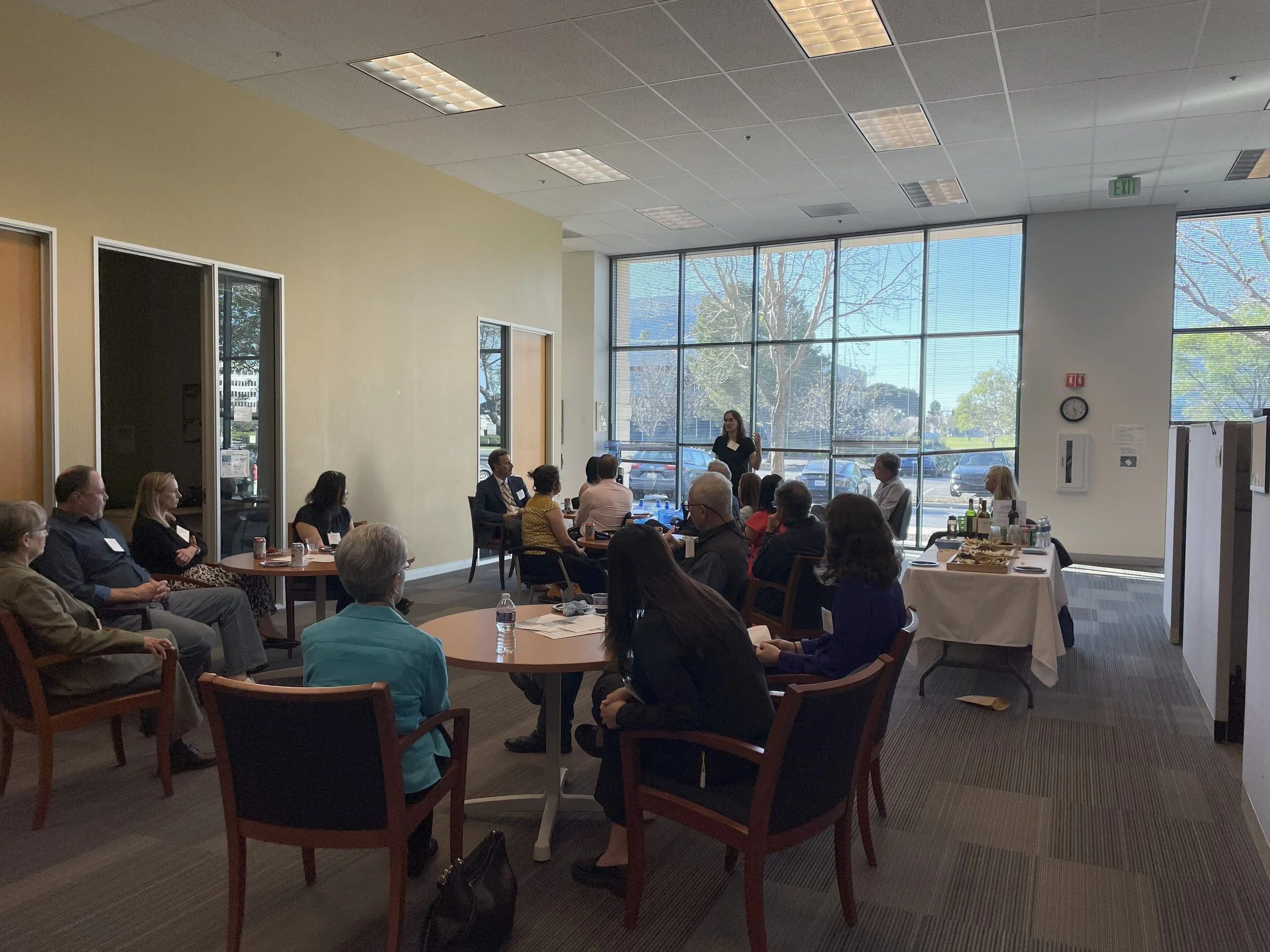
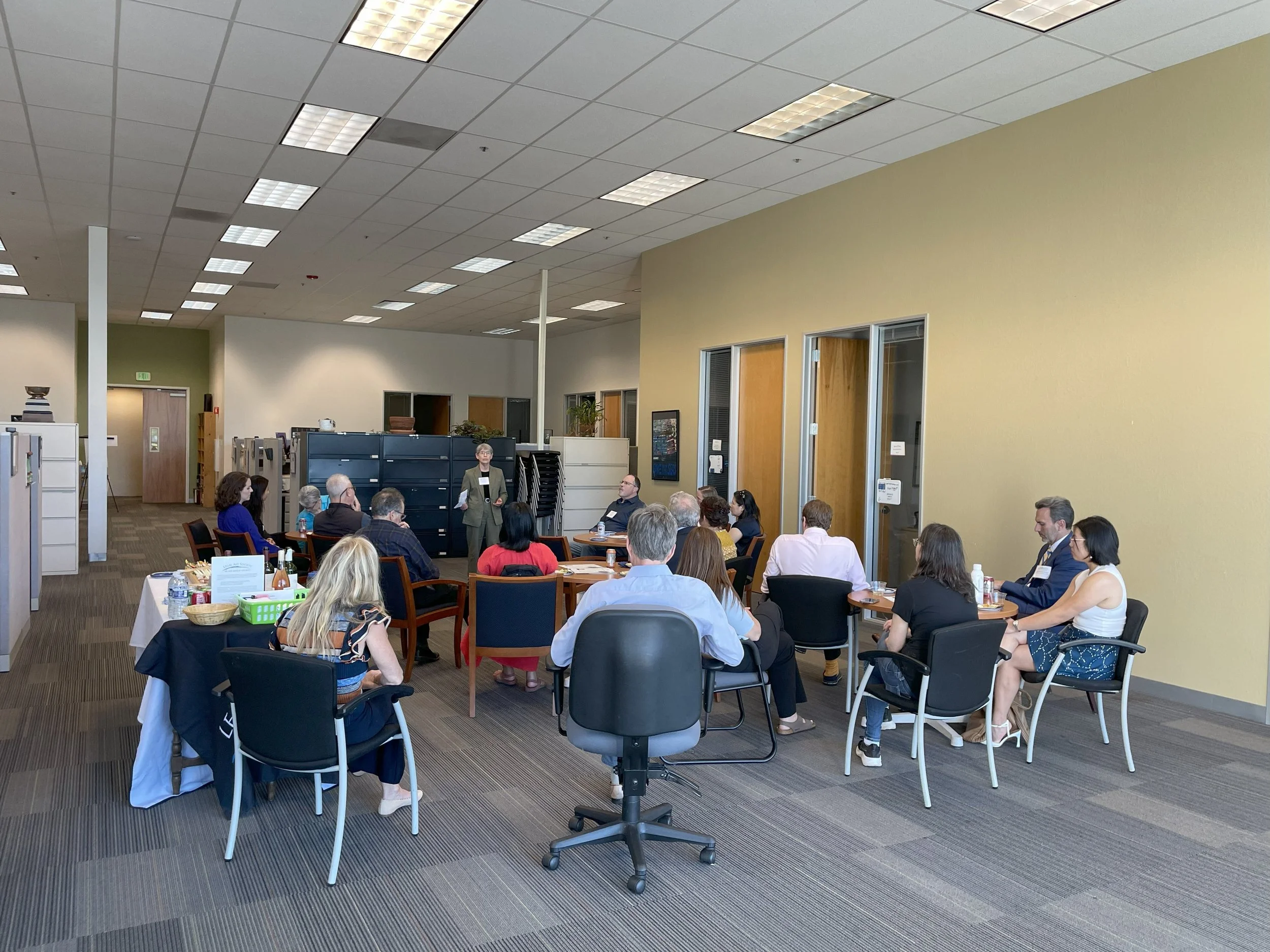
On March 19th, 2026, Legal Aid SMC attorneys gathered with local leaders to talk about important issues affecting local families and the life-changing impact that legal services can have on their journey. Bill Freeman, Secretary of the Legal Aid SMC Board of Directors, welcomed attendees to the new event and Executive Director Stacey Hawver spoke to the importance of community partnerships that allow our nonprofit law firm to expand its impact.
Jenny Horne, Directing Attorney of the LIBRE program, started off the session by celebrating Legal Aid’s successful collaboration with Faith in Action Bay Area’s Rapid Response Hotline. She shared the story of a young man taken into custody by ICE agents upon leaving his immigration court hearing, despite following every protocol and maintaining a spotless legal record. But because his family knew to call the Rapid Response Hotline, they received help directly from a Legal Aid attorney who worked with partners to secure his release by the beginning of the following week.
Jenny also highlighted recent changes to the Special Immigrant Juvenile Status (SIJS) program meant to help undocumented children facing abuse, neglect, or abandonment. Until last year, SIJS youth were granted deferred action, protecting them from deportation and allowing them to work while they waited several years for a visa. In June 2025, that protection was terminated, leaving many youths at risk. Now, applying for permanent residence as soon as a visa becomes available is critical, but the $500+ cost of a required medical exam poses a significant barrier.
Next, we heard from Michelle de Blank, Supervising Attorney and Legal Director of the Peninsula Family Advocacy Program. Michelle mentioned that her team is working hard to connect families with disabled children to In-Home Supportive Services, which provide them with financial assistance to cover the costs of in-home care. Michelle also raised concerns about gang activity in increasingly younger children and mentioned she is hoping to find local partners working on solutions.
David Carducci, Directing Attorney for Housing and Director of Litigation, spoke about the 60% increase in San Mateo County eviction cases since 2019. He explained that most evictions result from nonpayment of rent and that Legal Aid SMC attorneys work with local rental assistance programs to keep tenants going through periods of hardship in their homes. Unfortunately, this is no surprise in a county with some of the highest housing costs in the country, where it’s estimated that half of all renting households are spending over a third of their income on rent alone.
Stephanie Bilinski, Pro Bono Director, was pleased to share another successful partnership powered by former Legal Aid directing attorneys, Tricia Vinson and Hope Nakamura. Collaborating with law firms and retired attorneys, the group has visited five local nonprofit organizations to teach them about their legal rights when responding to ICE activity and provided policy reviews to ensure the impact is lasting.
Kathryn Greis, Staff Attorney with the Health Consumer Center (HCC), talked about her team’s work with a local hospital. After identifying legal issues with the hospital’s financial assistance program, HCC reached out to offer support in bringing the program into compliance with state law. Thanks to HCC’s longstanding relationships with hospital staff, the hospital was receptive. With guidance from the Western Center on Law & Poverty, HCC attorneys and hospital staff collaborated to update the program. These changes will help low-income patients access needed care without facing overwhelming medical debt.
Brian Fraser, Supervising Attorney for Elder & Disability Rights, talked about Legal Aid’s role in California’s new CARE Court program. The program aims to connect community members with schizophrenia or similar diagnoses to appropriate treatment and support. Brian explained that Legal Aid has taken on a third of San Mateo County’s cases, helping CARE court clients navigate the process and access important social services. He noted that Legal Aid is learning more about the support systems these clients interact with and how they might be improved.